
This guide to beginner dominoes helps you learn the basics of this classic dominoes game, understand scoring, and even helps you discover winning strategies. Let’s bring this forgotten game pastime back to life and show everyone that retro gaming is always in style!
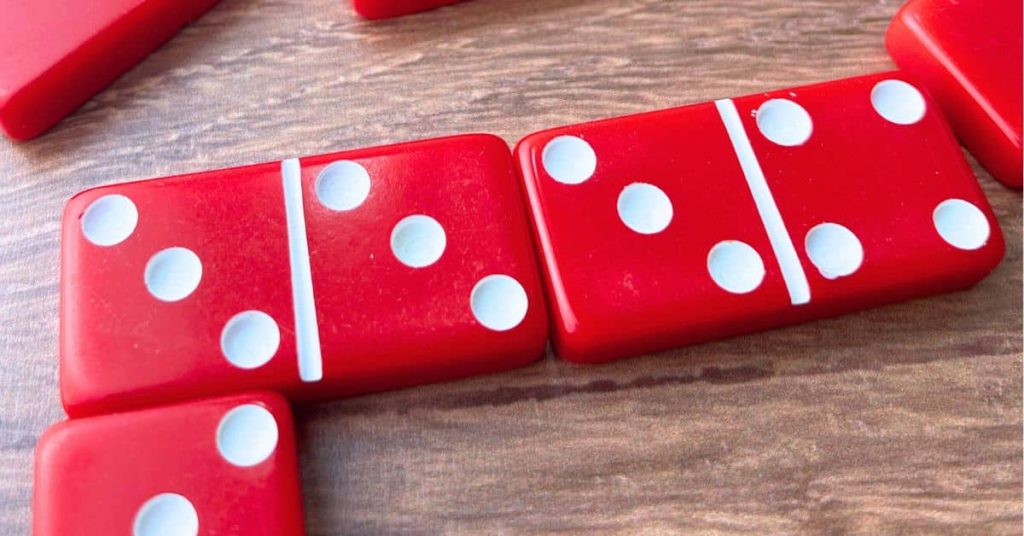
Blast from the Past: How to Dominate at Old-School Dominoes (Even If You’re New To The Game!)
If you’ve ever wondered how to play dominoes, we’ll help you unlock the secrets to dominating this old-school game of block-and-draw strategy.
The game of dominoes is perfect for those looking to master vintage gaming, rekindle nostalgic fun, or simply learn how to play dominoes for beginners.
(Bonus points, you can also line the domino tiles up and knock them down. It’s still fun for all ages! My teen still loves doing this!)
Dominoes Dictionary
If you’re new to the game, these dominoes terms will help you understand the game better (especially if you’re playing with seasoned domino players!).
But, don’t stress about the gaming terminology too much. Just play and have fun!
Domino: A rectangular tile divided into two square ends, each marked with a number of spots (pips) or blank.
Pips: The dots on a domino tile that represent its numerical value.
Double: A domino tile where both ends have the same number of pips, such as a double-six or double-three.
Blank: An end of a domino tile with no pips.
Bone Yard (or Boneyard): The pile of dominoes left face down after each player has drawn their initial hand. Players draw from the bone yard when they cannot make a move with the tiles in their hand.
Hand: The set of dominoes drawn by a player at the beginning of the game.
Layout: The configuration of played dominoes on the table during the game.
Match: To place a domino tile next to another tile on the layout with the same number of pips on the adjoining ends.
Spinner: A double tile that, once placed, allows play to proceed in four directions.
Train: A line of dominoes that extends from one of the starting doubles or from any double played during the game.
Set: The initial play of a double domino that starts the game or a new round.
Block: To play a tile in such a way that it prevents the opponent from making a move.
Draw: To take a domino tile from the bone yard when a player cannot make a move with the tiles in their hand.
End: The open ends of the layout where a player can legally place a matching tile.
Score: The total number of pips on all the dominoes left in a player’s hand at the end of a round, used to calculate the score.
Pass: When a player cannot make a move and must forfeit their turn, either by drawing from the bone yard or simply passing if there are no tiles left to draw.
Winning: The player who uses all their dominoes first or has the fewest pips remaining when no more moves can be made.
Game Points: The points accumulated over several rounds, with a typical game played to a set number of points, such as 100 or 150.
How Do You Play Dominoes Step By Step (Including How Do You Play Dominoes With 2 Players)
Before we get started, you should know that there are MANY different ways to play dominoes and games of dominoes — from 42, Chickenfoot (!!), Mexican Train Dominoes, and more.
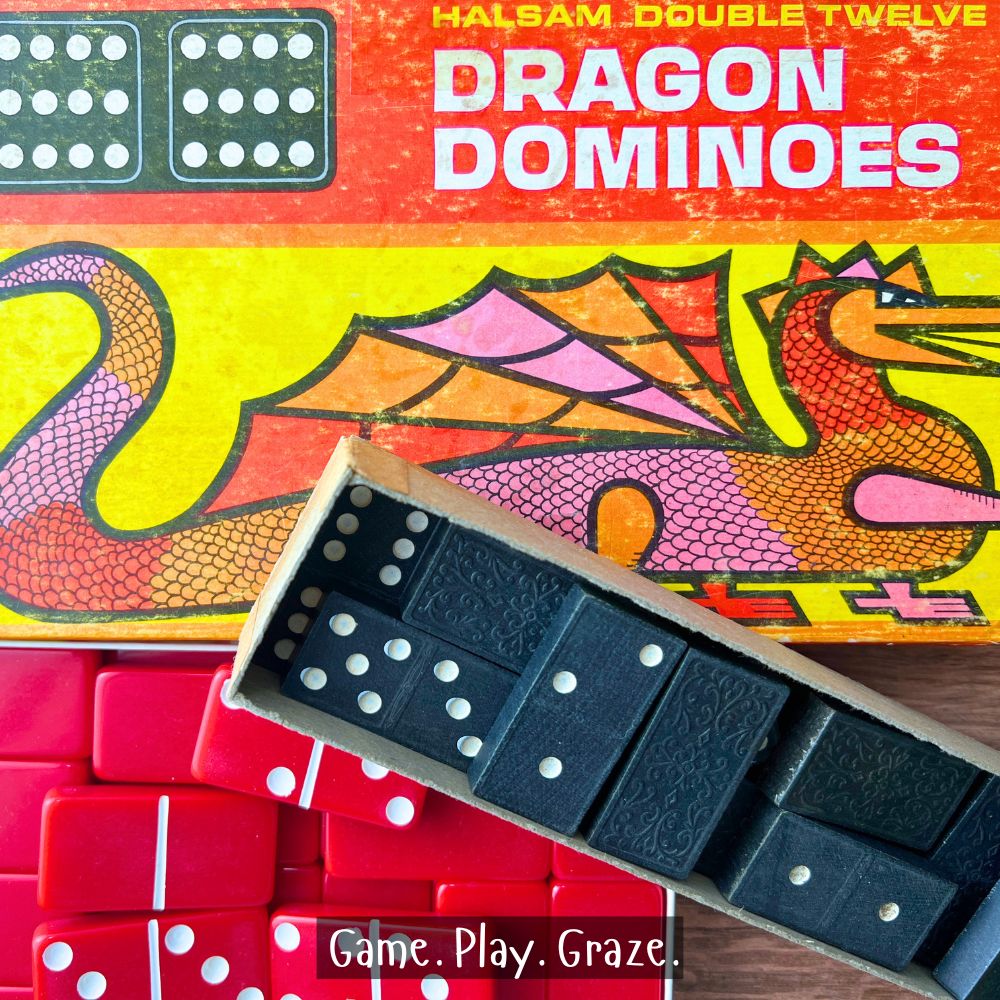
If you keep an eye out at garage sales and thrift stores, you can find some really cool old dominoes (like in the pictures). My daughter loves to go on a hunt for them now.
These are directions for the classic games of dominoes that can be played with up to four players.
(You can even play dominoes alone!)
How many dominoes do you start with?
In the traditional dominoes game, you start with five tiles for 2-4 players.
For 1-2 players, start with seven tiles.
If there are remaining tiles, they go in the middle to be drawn from later.
GAMING FUN FACT: That middle spot for later is called “the boneyard.”
How do you play the game dominoes?
1. “Shuffle” the tiles, meaning place the tiles face-down and mix them up.
2. Each player draws one tile.
The player who drew the highest “double” goes first.
DOMINOES TIP: A doubles is the matching numbers on both ends of one tile.
3. In a 3-4 player game, each player draws five tiles for their hand.
In a 2 player game, each player selects seven domino tiles.
If there are remaining tiles, they go in the middle and are called “the boneyard” for players to draw from if they can’t use their tiles.
4. Line your dominoes up (stand up) so that you can seem, but keep them hidden from your opponents.
(Or, use these awesome domino racks.)
5. The player who drew the highest domino in the beginning goes first by playing any domino they choose from their hand.
This first domino is called the “spinner.”
This is the only domino tile where you can play all four sides. Preceding forward, you can only play off of the ends of the dominoes.
6. The next person plays a matching domino to any one of the four open sides of the starting domino.
7. If at any time a player can’t match any of the domino dots on the board, they must choose dominoes from the “boneyard” (the middle extra tiles) until they find a match.
If a player picks up all the dominoes in the boneyard but still can’t play, play passes to the next player.
8. Scoring occurs when a player can make the exposed ends add up to multiples of 5.
9. The first person to use all of their tiles wins the hand.
The score of the unplayed dominoes in the other players’ hands are added to the score for the winner of the hand — round up to the nearest multiple of 5. Scores always end in multiples of 5.
WINNING DOMINOES: Dominoes game play continues until the first person to 150 points wins the game.
How do you score dominoes?
Scoring dominoes may be one of the trickiest things to learn at first.
Scoring happens when the exposed ends after you played your tiles add up to five.
GAME PLAY TIP: Only multiples of 5 are scored.
This is a great video that explains the basics of dominoes, including the scoring.
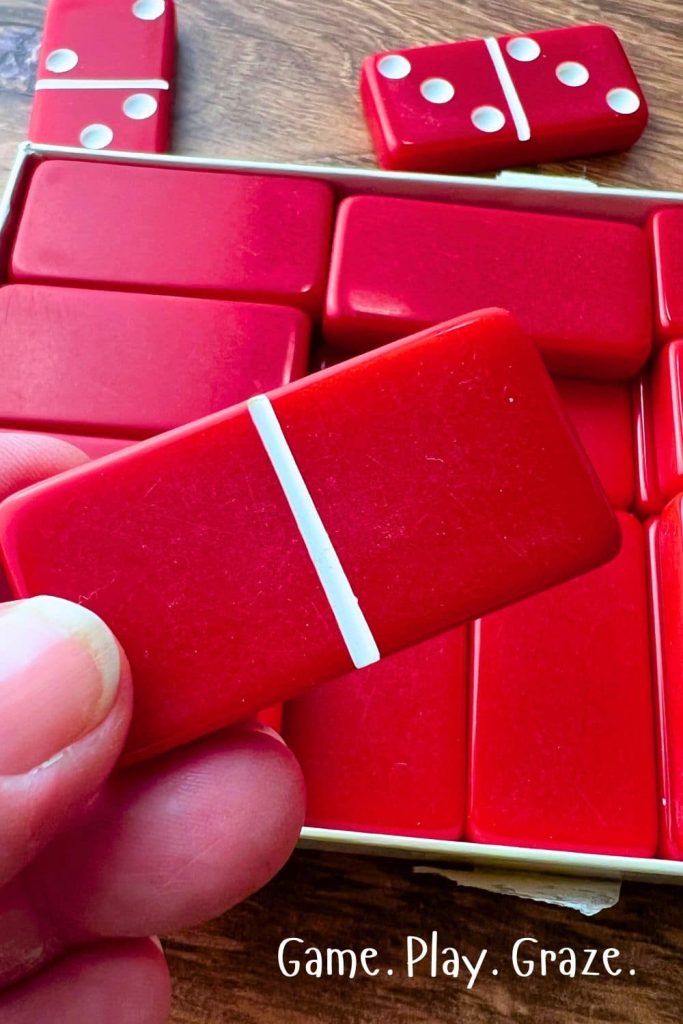
What does a blank domino mean?
There are two ways to play blank dominoes:
- Consider the blank domino tiles as “wildcards” that can be joined to any other number, or
- Blank dominoes are worth zero and can only be joined to other blank domino tiles.
Strategy Tips For Winning Dominoes
Play Doubles Early: Use your double tiles early in the game. They can limit your flexibility later on, so getting them out of your hand can be advantageous.
Control the Game: Try to control the game by playing tiles that match the numbers you have the most of. This keeps you in the game longer and gives you more options.
Watch Your Opponents: Pay attention to what tiles your opponents are playing and what they are drawing from the bone yard. This can give you clues about their hands and help you block their moves.
Block Your Opponents: If you notice your opponents are low on certain numbers, try to play tiles that force them to draw from the bone yard, effectively blocking their moves.
Force Draws: When possible, play tiles that force your opponents to draw from the bone yard. This not only gives you an advantage but also disrupts their strategy.
Is there any skill in dominoes?
YES! Learning how to play dominoes actually takes skill and strategy.
It comes with practice in helping you to determine which dominoes to play for the highest score value.
But, don’t let this discourage you from playing, especially with kids.
Just…play!
The strategy and dominoes skills get better the more you play (and the older the kids get).
Until then, it’s still a really fun family game of matching.
I hope you find this guide to beginner dominoes helpful!
